

The 18% Problem
Two voices explore Hamilton Pinto Jr.’s thesis, Running AI Like a Company, Not a Chatbot, and what it takes to give agents roles, scoped permissions and a record of their actions.
Synthetic host and guest · ElevenLabs Text-to-Speech v4
Read the transcript
Host Welcome. Today we’re talking about The 18% Problem: Running AI Like a Company, Not a Chatbot, a MasterClass Executive thesis by Hamilton Pinto Junior. I keep coming back to that title. What actually changes when you give software a job to do?
Guest Think about the difference between writing a reply and sending one. The first is a draft. The second reaches someone, makes a commitment, and leaves your company responsible for it. Once agents can act on your behalf, management starts to matter as much as model quality. You need to know which agents exist, what access they have, and who is accountable for the outcome.
Host And that’s where the 18% comes in, right? The thesis cites IBM Think 2026 research that found only 18% of organizations kept a complete inventory of their AI agents. What does that look like on an ordinary workday?
Guest Imagine that a customer gets a message they weren’t supposed to receive. If your team can’t tell which agent sent it or which permissions it used, you’re investigating from scratch. Hamilton describes giving each agent a named role, a clear brief, and scoped access. An agent can prepare the message. The authority to send it can go through a separate human approval. It’s a management decision you can apply to the next workflow you build.
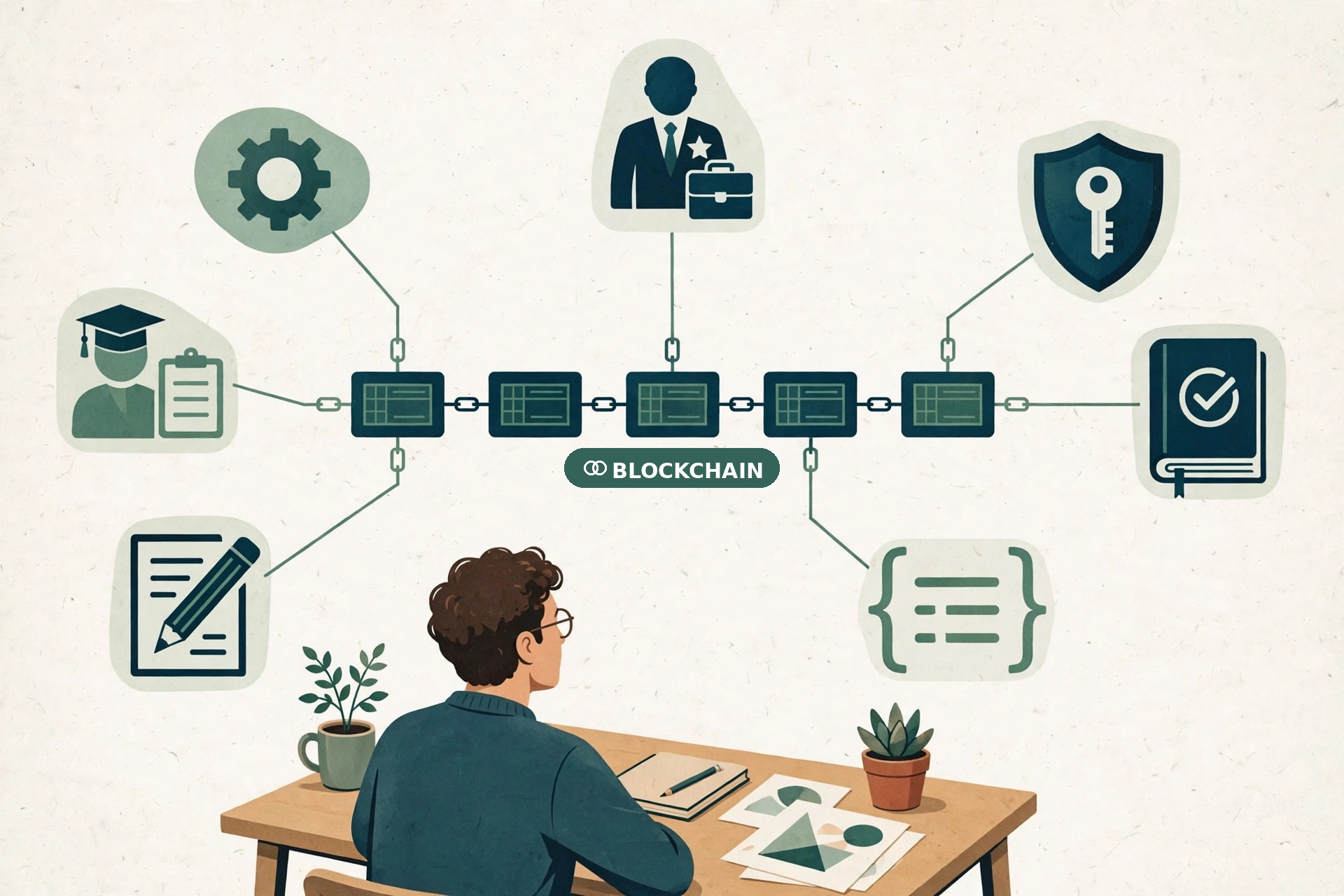
Host Okay, so first I can answer who works here and what they’re allowed to do. Hamilton also uses the phrase verifiable chain of custody. What would I actually be able to see?
Guest Let’s say an agent books an appointment. A reviewer should be able to see four things. Which agent requested it, who or what approved it, the action it took, and the result that came back. Link those entries in a tamper-evident record and you can spot if someone changes the history later. That’s Hamilton’s proposal for agent operations. The inventory research tells us how far organizations have to go on the basics. The chain of custody is his argument for what comes next.
Host If listeners want to try this with one agent this week, where would you have them start?
Guest Pick one action your customers can see. Ask someone on your team to show you what the agent is allowed to do, who approved its last action, and where the result is recorded. Any question they can’t answer is a concrete place to start.
Host I like that. One workflow, four things you can trace. Thanks for joining us and making this so practical. And thanks to everyone listening. The full thesis is right here on the site if you’d like to dig into it. See you next time.
Every tech wave needs a local expert
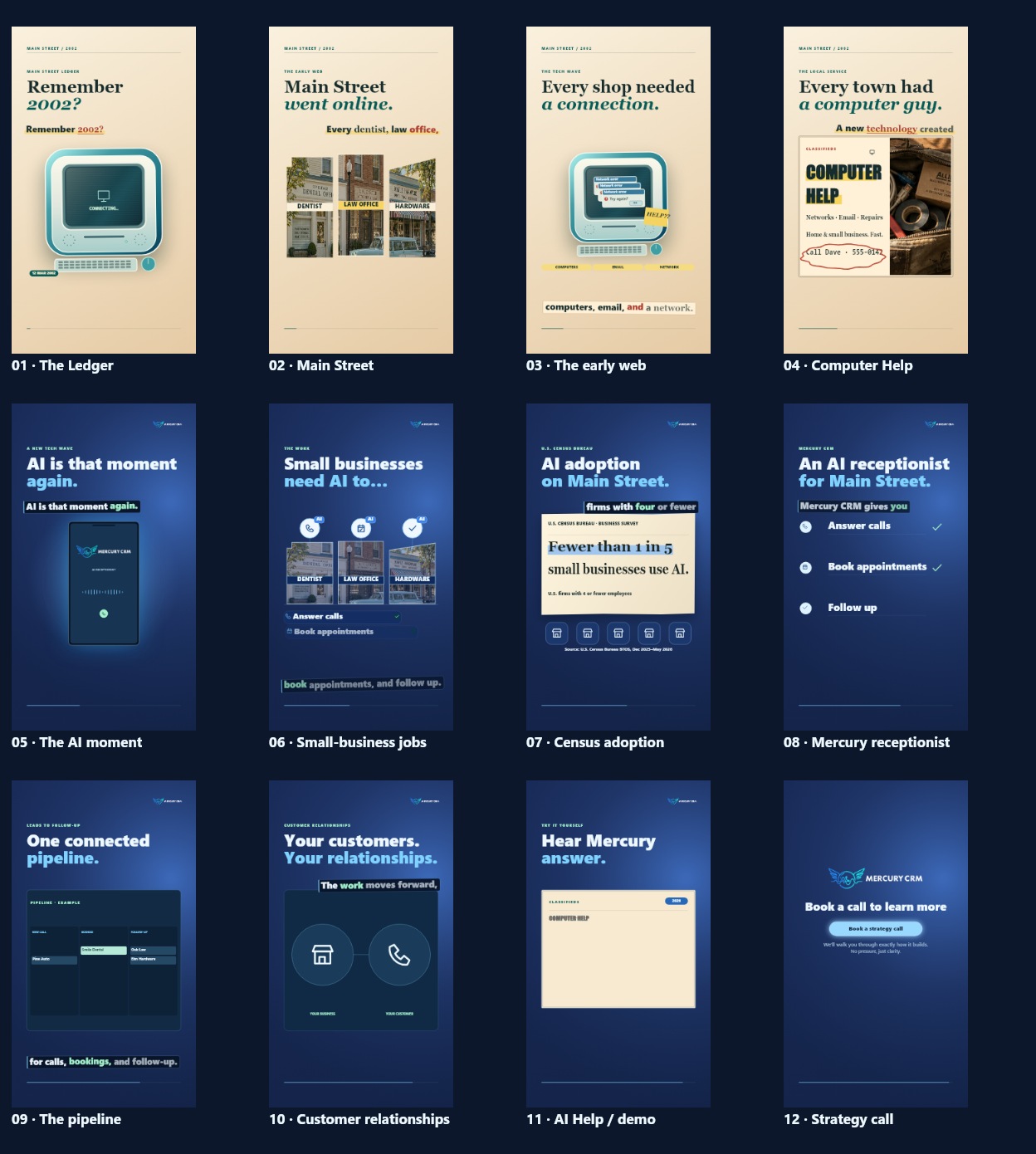
The film starts on Main Street in 2002, then cuts to a Mercury CRM receptionist in action. A front-facing computer cutout gives way to illuminated storefronts, floating AI badges, and a three-step checklist punctuated by chimes.

Book a call to learn more
Book a strategy callWe'll walk you through exactly how it's built. No pressure, just clarity.
Models, time and tokens
Hamilton credits Gemini 4.0 Neon for the initial specification, Muse for revisiting the brief, and Codex with ChatGPT 6.2 Sol on high for the build. His Otto3 editing workflow uses Claude Opus 5.5 and Ollama DeepSeek.